When someone makes a donation to an NPO, they are not simply transferring money.
They are placing trust in an organisation.
That trust creates an important responsibility: the NPO should be able to explain what happened to the contribution.
This is why donation tracking and fund utilisation are increasingly important for NPOs.
Donation tracking answers:
"How much did we receive, from whom and when?"
Fund-utilisation tracking answers:
"What did we use those funds for?"
Impact reporting goes one step further:
"What difference did those funds create?"
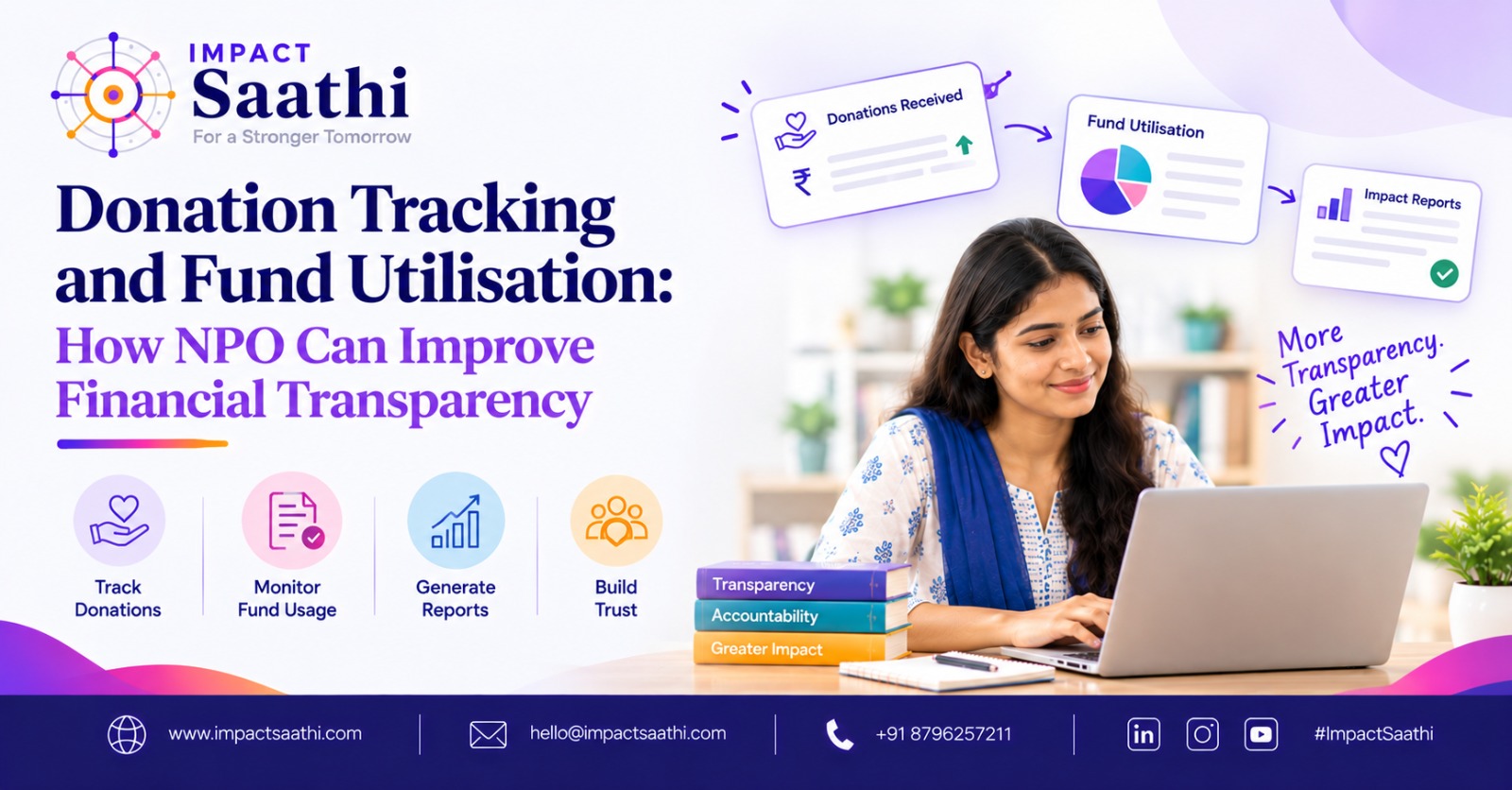
Together, these three elements can create a transparent donation lifecycle.
What Is Donation Tracking?
Donation tracking is the process of recording and monitoring contributions received by an organisation.
A donation record may include:
Donor information
Donation amount
Date
Payment method
Campaign
Project
Receipt
Applicable documentation
Communication history
For small NGOs, this may initially be maintained through spreadsheets.
As donation volume grows, a dedicated system can provide better structure.
What Is Fund Utilisation?
Fund utilisation refers to how received or allocated funds are used for the intended activities.
For example, an education NGO might receive funding for:
School materials
Teacher training
Student scholarships
Digital learning equipment
Community programmes
Fund-utilisation reporting helps demonstrate how the available funds were applied.
Why Donation Tracking and Utilisation Should Be Connected
A common problem is that donation records and programme records exist separately.
For example:
Donation spreadsheet:
₹10,00,000 received.
Programme spreadsheet:
₹7,00,000 spent.
Email folder:
Project update.
Google Drive:
Supporting documents.
The information exists, but it isn't connected.
A stronger system can establish a relationship between the donation, campaign and utilisation update.
The Donation-to-Impact Journey
A useful framework is:
1. Donation
Money is received.
2. Documentation
The contribution is recorded and the applicable documentation is generated.
3. Allocation
The donation is associated with a campaign or programme.
4. Utilisation
Funds are used for eligible activities.
5. Reporting
The organisation documents what was done.
6. Impact
The NGO communicates outcomes and beneficiaries.
This creates a complete story.
Money → Activity → Outcome
Why Donors Want Utilisation Updates
A receipt answers only one question:
Was my donation received?
A utilisation update answers a different question:
What happened because I donated?
This distinction is important.
A donor might receive hundreds of financial transactions every year.
But charitable giving is emotional as well as financial.
Donors want to feel connected to the change they support.
Examples of Useful Fund-Utilisation Updates
Depending on the programme, an NGO might report:
Education
Number of students supported
Learning materials distributed
Classes conducted
Teachers trained
Healthcare
Patients supported
Health camps conducted
Medicines distributed
Screenings completed
Livelihoods
Individuals trained
Businesses supported
Tools distributed
Employment outcomes
Environment
Trees planted
Communities engaged
Waste processed
Conservation activities completed
The numbers should be supported by appropriate internal records.
Why Fund Utilisation Improves Transparency
Transparency does not mean sharing every internal financial transaction publicly.
It means providing appropriate, accurate information about how funds were used.
An effective update should answer:
What was the programme?
What was the funding used for?
What activity took place?
Who benefited?
What was achieved?
Donation Tracking for Multiple Campaigns
Consider an NGO running five campaigns simultaneously:
Child education
Women's livelihood
Healthcare
Rural development
Emergency relief
If all donations are recorded in one spreadsheet without campaign-level structure, reporting becomes difficult.
A donation-management system can associate contributions with campaigns.
This makes it easier to answer:
How much did Campaign A receive?
How many donors supported Campaign B?
Which donors are linked to Campaign C?
What utilisation update should be sent to those donors?
The Role of Automation
Automation becomes especially useful when the same activity must be performed repeatedly.
Suppose an NGO publishes a campaign update.
Without automation, staff may need to:
Export donors.
Filter campaign supporters.
Create an email list.
Prepare the message.
Send the update.
Record the communication.
With an integrated platform, the campaign relationship can already exist in the system.
Impact Saathi describes its fund-utilisation functionality as allowing NGOs to publish updates and send them to donors linked to the relevant campaign through email and WhatsApp.
Donation Tracking and 80G Documentation
Donation tracking also plays an important role in tax-related documentation.
The Income Tax Department states that eligible 80G-approved organisations are required to furnish donation particulars through Form 10BD, with Form 10BE serving as the donor certificate under the applicable process.
This means accurate donor and donation information is important beyond internal accounting.
An organisation should have a reliable system for maintaining:
Donor details
Donation amount
Donation date
Relevant approval information
Certificate information
Supporting documentation
Common Donation Tracking Challenges
Challenge 1: Multiple spreadsheets
Different departments maintain different information.
Challenge 2: Manual reconciliation
Staff spend time matching payment data with donor records.
Challenge 3: Missing documentation
Receipts may be difficult to locate.
Challenge 4: Delayed updates
Donors may not hear about programme progress.
Challenge 5: Poor historical visibility
Staff may struggle to understand a donor's complete relationship with the organisation.
How NGOs Can Build a Better Tracking System
Create standard donor records
Use consistent fields for all donors.
Connect donations to campaigns
Every contribution should have a clear purpose where applicable.
Automate documentation
Reduce repetitive receipt-generation work.
Maintain utilisation records
Record project-level updates systematically.
Create donor communication workflows
Make updates part of the operational process.
Maintain an audit trail
Keep the relevant records connected and accessible.
What Does an Audit-Ready Donation System Look Like?
An audit-ready system should allow an administrator to start with one donation and trace its history.
For example:
Donor: ABC Foundation
↓
Donation: ₹5,00,000
↓
Campaign: Education Programme
↓
Receipt: Generated
↓
Utilisation: Learning materials + programme delivery
↓
Update: 250 students supported
↓
Communication: Donor notified
The objective is not simply to create more reports.
It is to make the underlying information easier to understand.
How Impact Saathi Supports Donation Tracking
Impact Saathi describes its platform as maintaining an auditable record across donations, receipts and fund-utilisation updates.
Its features include:
Donation and payment management
80G receipt automation
Campaign management
Fund-utilisation updates
Donor notifications
NGO administration
Certificate tracking
CSR reporting
This creates a post-donation management layer for NGOs.
Donation Tracking vs Accounting Software
These tools can serve different purposes.
Accounting software
Primarily focuses on financial accounting, ledgers, transactions and financial statements.
Donation management software
Focuses on donor relationships, campaigns, donation documentation, communications and donation-specific workflows.
Compliance platform
Can focus on the documentation, reporting and audit trail surrounding donations and organisational compliance.
For many NGOs, these systems may need to work together rather than replace one another.
How Better Tracking Helps CSR Teams
Donation and fund tracking is also important for corporate CSR teams.
A company funding multiple NGOs may need visibility into:
Which NGOs received funding
Which projects are active
Certificate status
Fund utilisation
Programme updates
Reporting status
Impact Saathi provides a CSR and compliance view designed to consolidate information across funded NGOs.
FAQs
What is donation tracking?
Donation tracking is the process of recording and monitoring donations received by an NGO, including donor details, amounts, dates, campaigns and associated documentation.
What is fund utilisation in an NGO?
Fund utilisation refers to how received or allocated funds are used for approved or intended activities.
Why is donation tracking important?
It helps NGOs maintain accurate records, support reporting, improve donor communication and create greater visibility into the donation lifecycle.
How can NGOs track fund utilisation?
NGOs can use spreadsheets, accounting systems, project-management tools or specialised donation and compliance platforms. The right solution depends on organisational size and requirements.
Can donation tracking improve donor trust?
Accurate records and timely utilisation updates can help donors understand what happened after their contribution and strengthen transparency.
How does 80G relate to donation tracking?
For eligible organisations, accurate donation information is important because the Income Tax Department requires specified 80G-approved organisations to furnish donation particulars in Form 10BD and issue Form 10BE certificates under the applicable process.
Can fund-utilisation updates be automated?
Yes, some platforms allow NGOs to create campaign-linked updates and communicate them to relevant donors automatically.
What should an NGO include in a fund-utilisation report?
Depending on the programme, an update can include activities completed, beneficiaries reached, milestones, expenditure information where appropriate and measurable outcomes.
Conclusion
Donation tracking should not end with recording the amount received.
For a transparent NGO, the complete journey matters:
Donation → Documentation → Allocation → Utilisation → Impact → Communication
When these stages are connected, organisations can create better records, reduce administrative effort and provide donors with clearer information.
Technology can make this process easier by connecting donation records with receipts, campaigns, utilisation updates and communication.
Impact Saathi is designed around this exact post-donation workflow, helping NGOs move from fragmented spreadsheets and manual processes towards a connected, auditable donation-management system.